Search
The following results are for articles, pages, courses, lessons, documents, events and FAQs on our website. You can also search our media library for additional information. And, for members, our community forum has a search feature that can be used to search thousands of posts among hundreds of topics among our community.

This week’s question was simple and confrontational...What is your purpose? Not your job title. Not your survival strategy...

An educational law-review style primer explaining how a church and integrated auxiliaries can be structured for a life of service outside commercial selling, while maintaining lawful tax posture, proper worker classification, and a clean separation for any public-facing LLC activity.

In this webinar we lay out what we feel is the only durable path to living outside commercial systems which is to serve through the church and its integrated auxiliaries abstaining from selling goods or services.
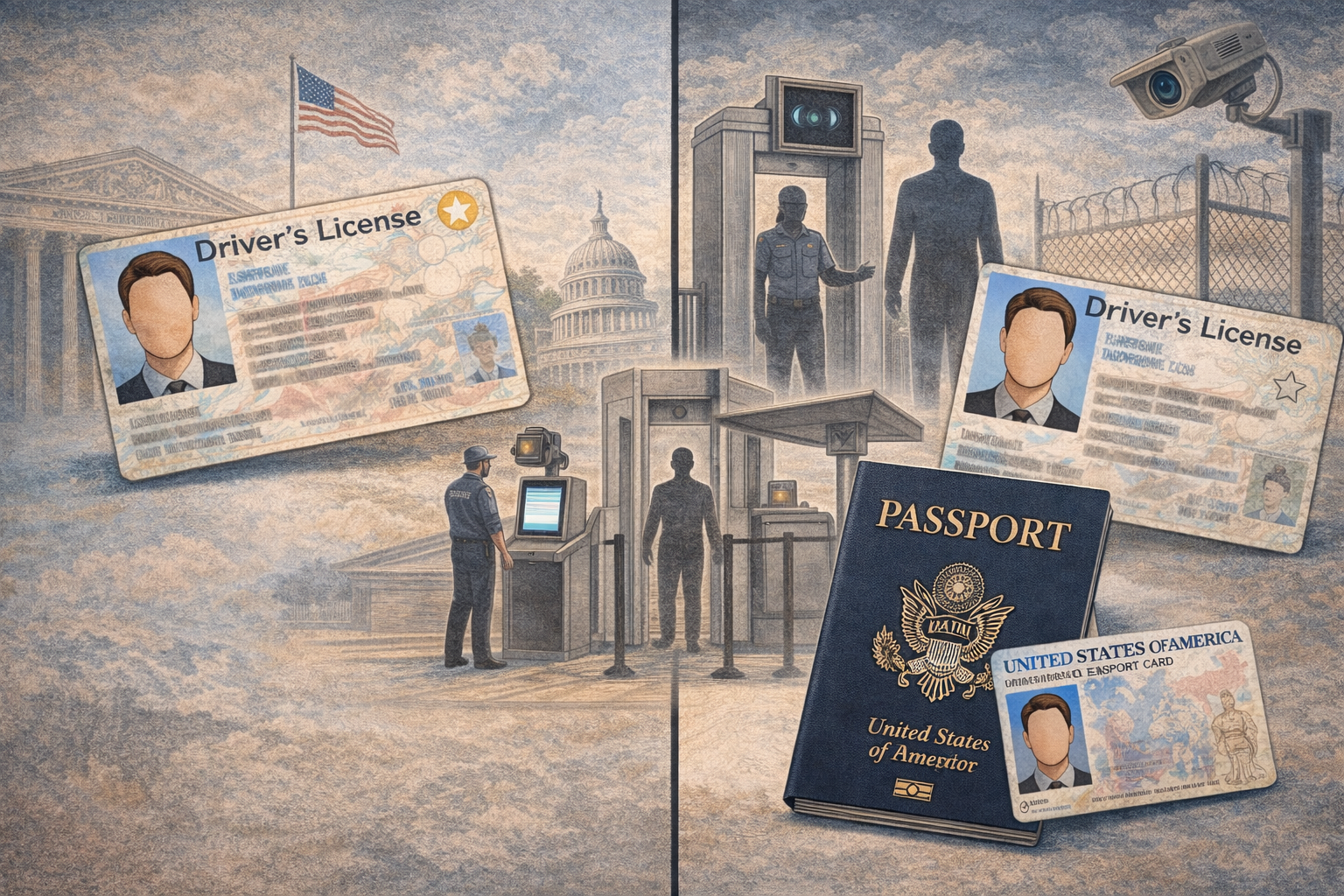
This article gives a plain-language overview of the difference between REAL ID cards and standard state IDs, including common uses and privacy concerns. It also explains general ways people think about reducing unnecessary data exposure while remaining within public-system requirements.
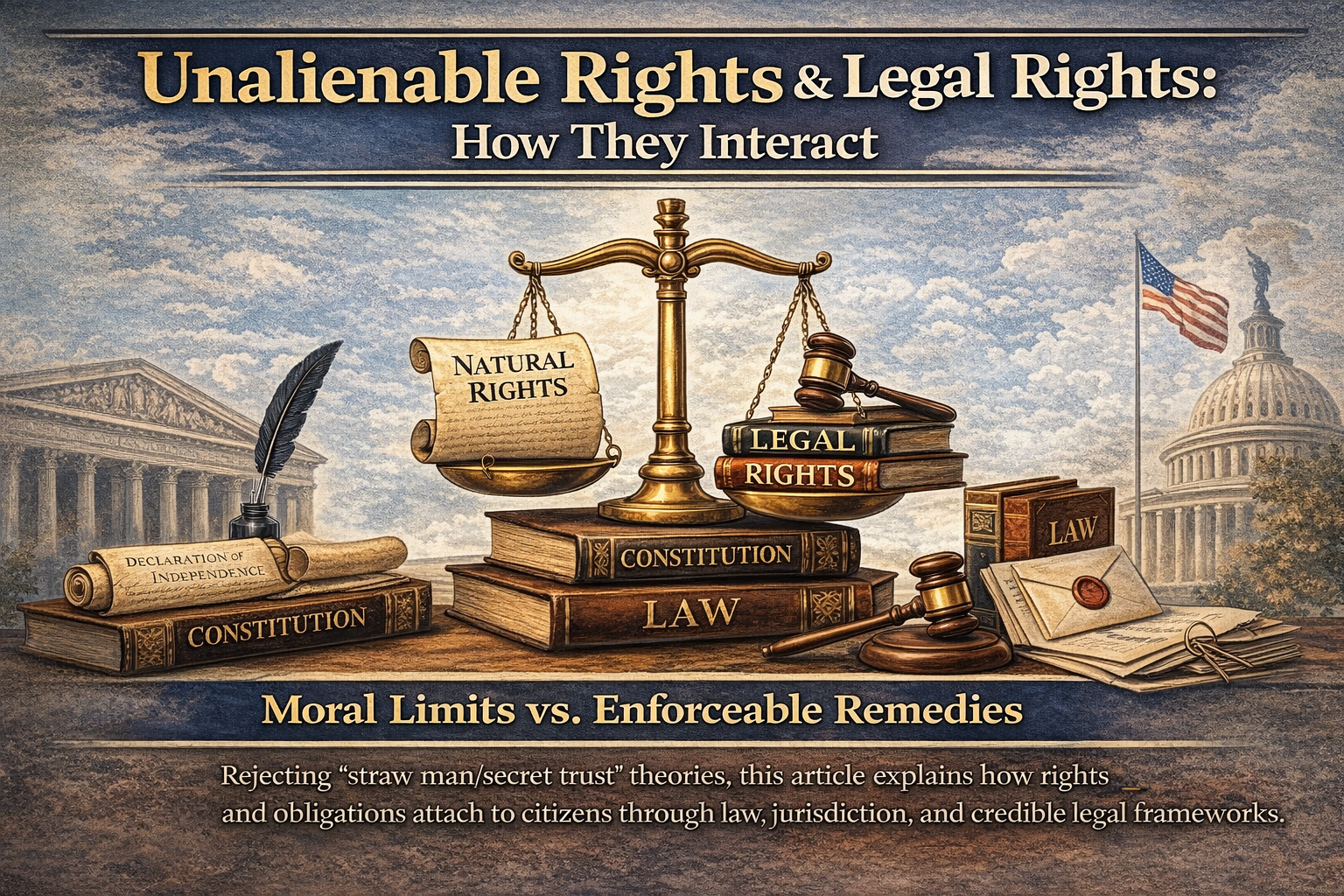
This article gives a plain-language overview of how unalienable rights and legal rights relate to one another: natural rights express moral limits on power, while legal rights describe how those principles are recognized inside civil systems. It also explains why “straw man” and “secret trust” birth-registration theories are not useful legal doctrine, and how rights and obligations are generally understood through jurisdiction, social membership, and recognized legal frameworks.

A short, practical course for HoMF members in six common-law countries on how to generate, serve, and use the Core Documents as a notice-and-proof system. Students learn how to populate the documents in the HoMF Document Generator, serve them with trackable mail, build a proof packet, and understand the rights, fairness principles, and enforcement channels that make notice meaningful.

What to do after notice such as follow-up, deadlines, and enforcement channels.

When to attach, when to reference, and how to speak in clean, credible language.

Build a proof packet that survives denial, delay, and distortion.

How to prepare trackable service and why the tracking number goes on the document.

Rights are enforced through procedure, remedies, and proof not sovereignty social media slogans.

How sincerity works, why beliefs are included, and why the language is non-sectarian.

Notice as the foundation of fairness, process, and enforceable accountability.

What the Core Documents are, what they do, and when to use each. The Core Documents rafted without myths or overreach.


This article gives expecting parents a plain-language overview of how U.S. law generally treats birth records, personhood, parental rights, and public-system involvement. It also explains why “straw man” theories are not useful legal doctrine and introduces recordkeeping, religious-belief documentation, and privacy discipline as educational concepts for understanding family-rights issues.
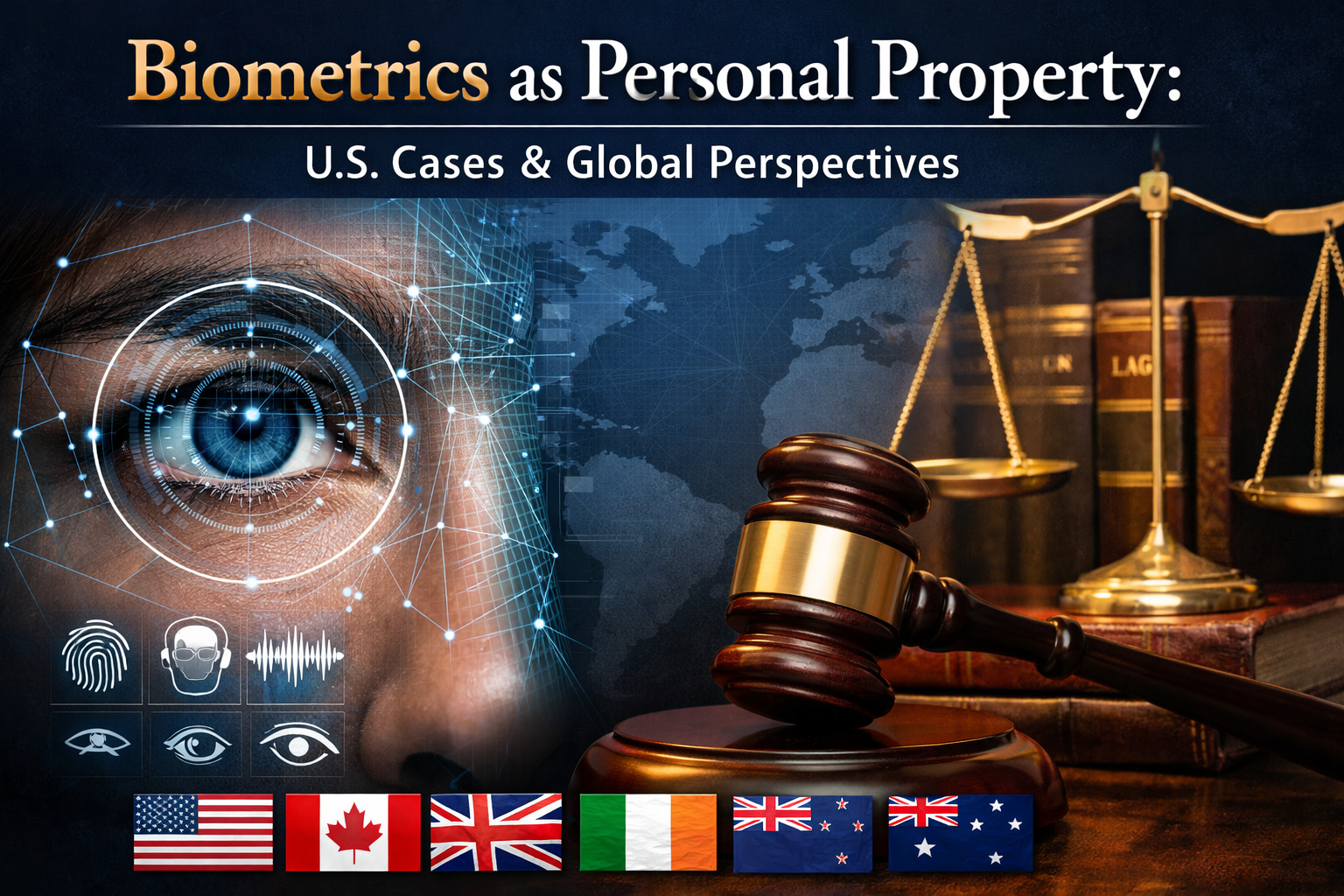
Biometrics, such as face geometry, fingerprints, voiceprints, even gait, function as personal, property-like interests under U.S. law. We connect Zacchini, Jordan, Rosenbach, Patel, McDonald, and Cothron to show how courts protect consent and control (quick cites for Canada, the UK, Ireland, New Zealand, and Australia).

Robert and Brian anchored the evening on why the Unity of Divine Creation Ministry (UDCM) matters, not as branding, but as the living basis of our sincerely held religious beliefs.
This course teaches what a “legal name,” “person,” and “rights” mean in common-law systems across the United States, Canada, the United Kingdom, Ireland, Australia, and New Zealand. It dispels recurring myths about birth/naturalization registration, ALL-CAPS styling, and pseudo-jurisdictional labels, while training students to protect unalienable rights by timely assertion and enforcement in real procedures.

Understand how names attach to data trails and how privacy strategy supports liberty in modern systems.